



High Traffic Schools Need High Scrub Paints

You probably already know that paint is the simplest and most economical change you can make on an environment. But it’s time to dig a little deeper. How long do you want your design to last? How long does your client want the design to last? This is where high scrub paints come into play.

Check out our checklist on 8 Steps To Choosing A Product For Your School Design!

British International School and Scuffmaster's ScrubTough

Back To School

Since it’s time for school to start, we thought we’d focus in on those school classrooms and hallways in particular. Hundreds of thousands of kids run through schools everyday. Books, bags (maybe even bullies?) can really damage those walls. Scuffs and stains, you name it, those school walls have seen it. So what’s a designer to do to protect their design, meet their client’s expectations and budget, all while creating a beautiful space for learning?

High scrub paint is your answer. Paint CAN hold up to the bullying those high traffic areas have to endure, you just have to make sure you’re picking the RIGHT paint for the project. If you’re choosing a standard eggshell with a scrub rating of 300, the product is going to fail and the client is going to have to repaint. That’s a situation neither parties want to be in. Paints with a scrub rating of at least 3,000 scrubs can transform those busy areas in school and keep them looking nice and tidy, while also being cleanable for years to come. The higher the scrub rating, the more durable the paint. This means that your design will last for many a good washing.
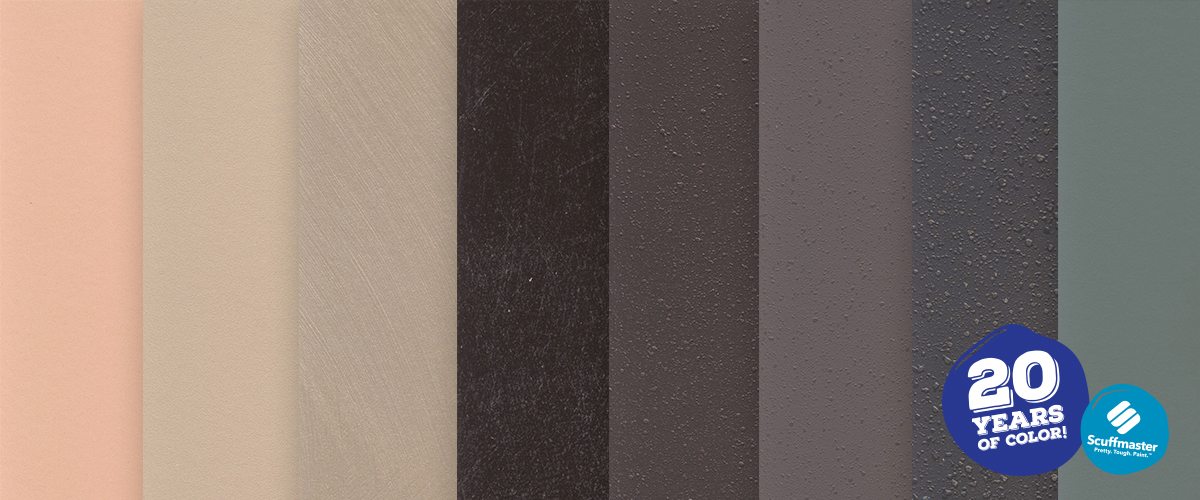
Scuffmaster's High Scrub Finishes

But High Scrub Paint Sounds So Industrial…

It does sound industrial, and a little intimidating. But it’s not! High scrub paints can look like your typical eggshell paint (but it’s secretly going to last forever), but also offer options like unique textures and metallics. Check out what specialty paints offer high scrub ratings and you’ll be pleasantly surprised with your options. Durable paints CAN also be beautiful!

Your Client's Budget Loves High Scrub Paints

Client’s Budget

You may be thinking, “specialty paints are so expensive, my client’s budget doesn’t support that”, but have you figured out how much it costs over its lifespan? Think about it. If you use a cheap paint in your client’s budget, they’re going to spend easily 2x+ repainting their space when that paint doesn’t hold up to the high traffic. A more expensive paint with a high scrub rating will actually SAVE them money over the lifespan of the space.

Competing Products Leave Your Walls Scuffed and Damaged

Competing Products

Right now you might be thinking that epoxy or a vinyl would be a good option for your project. Maybe… but what does the cost of the product over the lifespan of the space come out to? Epoxy and vinyl are more difficult and expensive to install than a high scrub paint, so you’re spending more of your client’s money right off the bat, let alone calculating the product’s lifespan. What is the lifespan compared to a high scrub paint? How much are you spending over the years patching and touching up? These are all things to consider when picking the final product for your school design’s high traffic areas.

 Wow, That’s A Lot To Think About

Not really, we crammed a lot into this post to make sure you’d have all the information you’d need, but in reality it’s pretty simple. Establish your client’s budget, determine what the lifespan of the products should be, research your high scrub rating options, calculate the cost over the products lifespan, then choose your product! Don’t forget to pick just the right color either. Easy.

Check out our checklist below on 8 Steps To Choosing A Product For Your School Design (seriously, it’s free)!

High Scrubs Checklist

The Colors of the Olympic Rings

The Colors of the Olympic Rings

The Olympics are one of the most recognized (and protected) brands in history. The signs, songs, and symbols of the Modern Olympic games stir the emotions of people on every continent. And while competition is at the heart of the Games, the design of the Olympic symbols was driven by a spirit of unity.

Check out our colors of the olympic rings.

Considered the father of the Olympic Games, Pierre de Fredy, Baron de Coubertin was a French educator, historian and founder of the International Olympic Committee. A bit of a polymath, the modern Olympic Games are the international spectacle that they are because of Pierre de Coubertin and his dedication to uniting people through sport.

What do the rings mean?

The 5 rings might be the most well known symbol in the world. But what do they actually stand for? And how were the colors chosen? Created in 1912 by Pierre de Coubertin the five interlocking rings originally represented the 5 world continents: Africa, Asia, America, Europe and Oceania. Laurel or olive wreaths were popular decorative elements in the 19th century and were said to be handed over by goddesses of victory. It is expected that these wreaths and the goddesses of victory were inspiration for the ring motif. This symbol of interlocking rings was meant to symbolize the union of the five continents of the world coming together to watch as their best athletes compete at the Olympic Games.

The 6 colors of the olympic symbol

Flags

Coubertin says in an April 1927 issue of Messager d’Athenes:

“The great Olympic flag is hoisted up the same pole that it is to remain on for the duration of the Games. It was criticized when I designed it. Today everyone likes it. It is white, as you know with five interlinked rings, blue, yellow, black, green, red, representing the five parts of the world united in Olympism.”

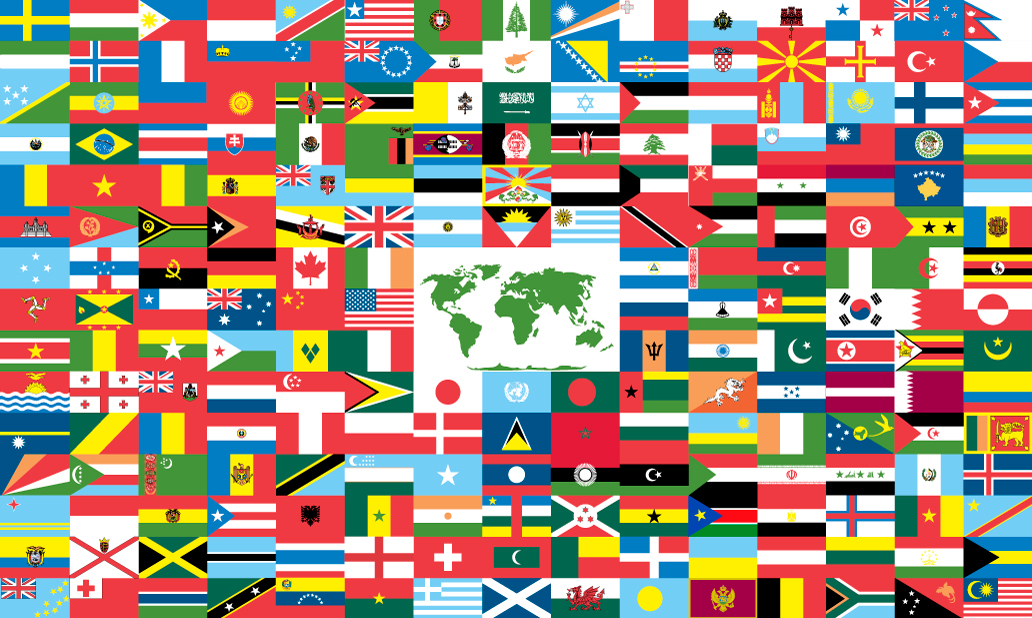
Officially debuted at the Games of the VII Olympiad in Antwerp in 1920, the rings also represented all 6 color combinations of every country’s flags without exception (in regard to the year 1913).

Although no ring is meant to symbolize a continent or country exactly, the combination of them covers all countries. On it’s debut, Coubertin stated in August 1912’s edition of Olympique:

“…the six colors (including the flag’s white background) combined in this way reproduce the colors of every country without exception. The blue and yellow of Sweden, the blue and white of Greece, the tri-colors of France and Serbia, United Kingdom of Great Britain and Northern Ireland, America, Germany, Belgium, Italy and Hungary, and the yellow and red of Spain, are placed together with the innovations of Brazil or Australia, with old Japan, and with new China. Here is a truly an international symbol.”

The rings today

It is to be noted that the colors are not intended to refer to a continent specifically, more so represent each possible combination of participating countries’ flags. If you ignore the varying shades of blue, red, green and yellow seen across modern flags, the colors in the rings still don’t quite cover all countries’ colors today. The orange tone that is seen in flags of countries such as Bhutan, Armenia and Sri Lanka is not one of the 5 colors of the Olympic Rings. Considering the symbol’s creation in 1913 was over 100 years ago, it is incredible the relevance the symbol still carries, and the power of the 6 combined colors.

Find even more information on the Olympic Rings here

Olympic Samples